How to Dewinterize Your RV
March 27, 2025
Spring is here, and if you're anything like us, that means you're itching to get your rig back on the road. If you winterized your RV to put it in storage through the colder months, you'll need to dewinterize it before you head out. Follow our guide below to make sure you've taken all the necessary steps to get your camper ready (or if it's all seeming like too much, book an appointment at one of our service shops and let us handle the hard stuff).
Inspect the Exterior
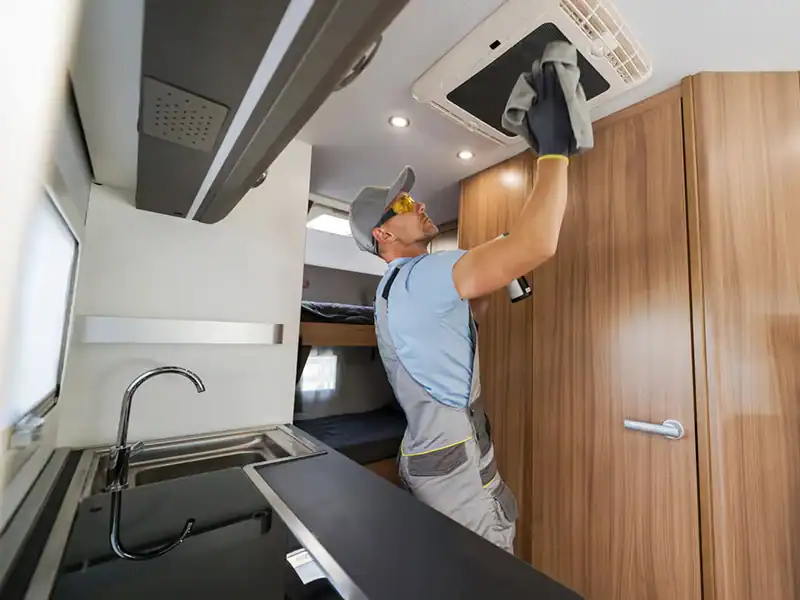
- Check the roof for cracks, tears, or damaged sealant, especially around vents and AC units.
- Inspect windows, doors, and slideout seams for any signs of water damage or deterioration.
- Examine the underbelly for any tears or openings that could allow pests to enter.
- Look for signs of delamination, stains, mold, or mildew.
- Check LP appliance exhausts (stove, refrigerator, furnace, water heater) for bugs and debris
Inspect the Interior
- Check for any discoloration on walls, which could indicate leaks.
- Look for warping or damage to countertops.
- Inspect insides of cabinets for any signs of antifreeze, which could suggest plumbing issues.
- Test your appliances for proper function.
- Check LP, smoke, and carbon monoxide detectors for expiration dates.
Dewinterize your Plumbing
- Flush the water lines completely if you added antifreeze to your fresh water tank to winterize — check your owner's manual for best practices, as this process can vary.
- Fill the fresh water tank with potable water.
- Turn on the water pump or connect to a city water supply.
- Take the water heater out of bypass mode.
- Open all taps (hot and cold) until clear water runs through.
- Flush the toilet several times.
- Replace any water filters that were removed for storage.
Sanitize the Fresh Water System
- Mix a solution of 1/4 cup vinegar per 15 gallons of tank capacity, or use a sanitation product designed for this purpose (we recommend Unique Camping & Marine), add it to your fresh water tank, and fill with water.
- Run water through all faucets until you smell bleach.
- Let the solution sit for 6-24 hours.
- Drain the system and refill with fresh water.
- Flush until the bleach smell is gone.
Take Care of Your Tires
- Check tire pressure on all tires, including the spare.
- Inflate tires to the manufacturer's recommended pressure.
- Inspect tires for signs of wear, cracking, or damage.
Take Care of Your Battery
- Inspect batteries for corrosion or damage.
- Check battery water levels (for lead-acid batteries) and top up with distilled water if needed.
- Fully charge the batteries before your first trip.
Check, Test, and Clean
- Lubricate moving parts such as hinges, steps, and slide-out mechanisms.
- Test all safety devices, including smoke detectors, carbon monoxide detectors, and fire extinguishers.
- Inspect and clean awnings.
- Check and replace any damaged weatherstripping around windows and doors.
- Check insert trim.
Proper de-winterization is essential for the longevity and performance of your RV. Taking the time to prepare your camper now will let you take worry-free adventures throughout the spring and summer.
If you're worried about performing all these tasks yourself, consider having a professional service shop handle the de-winterization process — we'd love to help! You can book an appointment here and start your camping season stress-free.